

As an Amazon Associate, I may earn a small commission from qualifying purchases made on Amazon.com
You’ve probably heard about people experiencing health problems because of mold, but have you heard about how mold exposure can affect our four-legged friends? If your home, doghouse, or other places where your dog frequents, are affected by mold, then the chances of mold poisoning or mold allergies in your dog increase drastically.
We typically know when someone around us is sick, but with pets, it’s not always as obvious. We can tell something’s wrong with them by observing and noticing changes in their regular behavior, eating habits, and other factors.
In this article, we will describe how to quickly detect mold poisoning symptoms and how to address mold exposure in dogs.
Mold Poisoning in Dogs:
15 Symptoms To Be Aware Of

You’ve probably heard about people experiencing health problems because of mold, but have you heard about how mold exposure can affect our four-legged friends? If your home, doghouse, or other places where your dog frequents, are affected by mold, then the chances of mold poisoning or mold allergies in your dog increase drastically.
We typically know when someone around us is sick, but with pets, it’s not always as obvious. We can tell something’s wrong with them by observing and noticing changes in their regular behavior, eating habits, and other factors.
In this article, we will describe how to quickly detect mold poisoning symptoms and how to address mold exposure in dogs.
Table of Contents
How Can Mold Affect Dogs?
Dogs are affected by mold in similar ways to humans. In fact, dogs have a weaker immune system, which makes them more susceptible to mold-related illnesses.
Some dog breeds may develop mold allergies faster than others. For instance, brachycephalic breeds (with flat faces and short noses) are prone to respiratory diseases, so exposure to fungus can make it even worse. But in general, all dogs can be affected by mold.
What Molds Are Dangerous for My Dog?
There are hundreds of thousands of mold species out there, and not all of them are toxic and can cause harm. But it takes time and tests to determine if the mold in your home is toxic, and if its levels are dangerous. Simply, if you can see mold you know it is a bad sign.
The most common types of fungus in homes are Aspergillus, Cladosporium, and Stachybotrys (black mold). All of these can cause allergic reactions and health problems in humans and pets. If left untreated, molds can cause serious health problems.
Symptoms of Mold Exposure or Allergies in Dogs
The causes of symptoms of mold poisoning or exposure in dogs can be put into three categories:
- Inhaling mold spores
- Ingestion of moldy foods
- Allergic reactions
Let’s talk about each of these and how they can affect your dog’s health and what to watch out for.

Symptoms of Dogs Inhaling Mold Spores
Mold spores are all around us – both outdoors and indoors. The types and amount of spores in a given place determines the potential health risk. The amount of airborne mold outdoors varies by season and conditions. People and animals are typically accustomed to the mold types and levels outdoors.
Airborne mold conditions in indoor spaces should be at or below the average amounts observed in the nearby outdoors. Over time, because of moisture, most indoor spaces develop what we call “mold factories,” where mold growth takes place.
Mold factories are typically present in areas where moisture is or was present – i.e. window sills, sinks, bathrooms, toilets, etc. When mold is growing indoors, it’s common for mold to release harmful spores and mycotoxins into the indoor environment.
When unhealthy levels and/or types of mold spores are inhaled by dogs, they can cause a number of health problems, including symptoms like:
- Difficulty breathing
- Wheezing, sneezing, or coughing
- Nasal discharge
- Lethargy
- Nose and/or mouth bleeding
Typically, these symptoms can be successfully treated, but they’ll likely return if the problem environment isn’t corrected. You can prevent your dog from inhaling unhealthy levels of mold spores by controlling the air quality in your home. If you have any moisture problems, you need to resolve them quickly. The EPA suggests having moisture levels in your home between 30-50%. Remember, moisture control is mold control.
Symptoms of Dogs Eating Moldy Food
It’s no secret that dogs love to eat or chew on whatever they can find. Sometimes you just can’t react fast enough to take something away from them. In most cases, dogs will be fine, but what if they have eaten something moldy? If dogs get into trash or eat something in the park, they might get poisoned, so keep an eye on your pet.
The regular dog food you have used for years without issues might develop black mold growth. Moist, dry, and home-cooked types of food are all susceptible to mold growth. Consider grain-free dry dog food. Recent studies showed that it is less likely to develop mold or contain mycotoxins.
Grain-free Dry Dog Food



Whether you have an impatient puppy or a swimmer, don’t let water get into his food or bed.
Moldy refrigerator food and compost piles, if easily accessible to your dog, can be a way of getting mold toxins.
Symptoms of mold poisoning in dogs through ingestion can include:
- Decreased appetite
- Vomiting
- Stool changes (sometimes with blood)
- Tremor
- Seizures (if a significant amount is ingested)
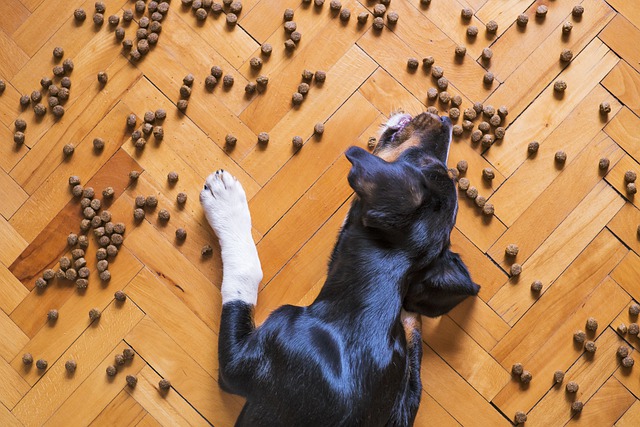
There are a couple of things you can do to prevent your dog from eating moldy foods:
- Keep your dog’s food in dry places like airtight plastic containers
- Check the food before feeding your dog
- Don’t throw your food in the backyard or in trash cans that dogs can easily access
- Keep an eye on your dog when outdoors
Symptoms of Mold Allergy in Dogs
Most of the time, you can detect a dog allergy if it manifests on the skin. Mold allergy might irritate your dog year-round, unlike the seasonal pollen allergies.
The symptoms of black mold allergy might come and go, depending on the air humidity outside and inside. According to the Whole Dog Journal, these mold allergies are most likely develop in dogs between the ages of 6 months and 3 years. Although it is true in most cases, dogs of different ages can suffer from it.

Most often, black mold allergy symptoms will show on dog’s skin, so look out for:
- Excessive scratching, licking, biting, or chewing
- Inflamed or irritated skin
- Skin dryness and scaliness
- Fur loss
- Unnatural skin odor
All dogs love a good scratch, but if you notice your dog rubbing or scratching more than normal against furniture or other objects – it is time to check their skin for irritation or allergies.
Professional tip: check your dog’s bed. If it is often wet, then mold can develop inside of it. To easily prevent that from happening, purchase a water-resistant dog bed.
Water-Resistant Dog Bed



Whether you have an impatient puppy or a swimmer, don’t let the water from him get into his bed.
How to Know if Mold is Causing the Problems?
It’s important to watch your pet’s health closely, but treating illness without confirming it with a licensed vet might cause additional problems. Mold poisoning symptoms in dogs might resemble other health issues, so don’t jump to conclusions.
If you see mold growth – it increases the chances that your dog is affected by it. But mold problems may not always be visible. There are a couple of things that will help you know if your residence has mold problems when it’s not as obvious:
- Check the humidity levels. Levels of more than 50%-60% create an environment for mold growth. EPA recommends keeping humidity levels in homes between 30% and 50%
- Mold spores spread the musty or damp smell
- Mold is more likely to develop in houses with a history of leakage or flooding
- If you experience any mold-related symptoms like headaches, nosebleeds, or difficulty breathing
When you suspect mold, the best course of action would be to hire mold contractors to test your air for unhealthy mold levels and/or types.
If your dog keeps exhibiting symptoms of mold poisoning, you should visit the veterinary clinic as soon as possible to avoid complications.
How to Treat Mold Exposure in Dogs?
As we mentioned before, you should not treat your dog for mold exposure on your own. It is almost impossible to differentiate between mold allergy and other types of allergies without doing allergy testing first. Your veterinarian will also run exams and review your pup’s history to diagnose your dog’s symptoms.
When veterinarians find the reasons for your dog’s health issues, they will start treatment of mold poisoning symptoms. Depending on the type of poisoning, the treatment may vary, but generally, it involves medication and possibly a localized cure.
This treatment doesn’t end at the veterinary clinic. If mold problems remain in your dog’s environment, then those symptoms will likely come back. To ensure that doesn’t happen, you need to locate and correct the source of moisture and perform mold remediation to make your dog’s environment healthy again.
Pay particular attention to the places where your dog spends most of his time.
Conclusion
If you notice that your dog has black mold poisoning symptoms, acting quickly is a key. If you hesitate, the symptoms can evolve into serious problems.
Despite your desire to ease your dog’s suffering, remember not to treat these symptoms on your own. Always consult with your veterinarian before you take any action.
Equally important to getting your dog’s symptoms treated is to be sure the environment that caused the symptoms is corrected – a reputable mold removal company can help with this. Taking quick action will give your dog the best chance of making a full recovery and getting back to what your dog loves to do!
Do Your Friends Have Dogs?
Now that you found out what to do when your dog is feeling sick because of mold, it’s time for you to pass that knowledge onto other dog owners you know. SHARE IT.
[DISPLAY_ULTIMATE_SOCIAL_ICONS]

We are having to move due to serious rising dampness which is in the walls and the smell is horrendous for 10 months. My labrador has been coughing and making moaning sounds all night for weeks now and also sge is a black lab but a third of her body is now covered in white spots of fur.
Could the mould causes these symptoms?
We lost our dog to a rare brain tumor (cancer) on 10/28/2025. The neurologist said that it could have been caused by the environment, but since we didn’t to put him through an autopsy, we aren’t sure. My husband just found black mold behind his childhood photo. Now, we are very upset thinking that the black mold caused his brain cancer :-( our dog lost his left eye to cancer in 2020 and he had thyroid cancer last year and needed chemo. He has been doing good until he fell over one night in August and had a seizure, then a few followed during the night. We rushed him to MedVet in Pittsburgh and he saw a neurologist and was given 2 months :-( and he said that the tumor was in the back under his brain and was inoperable. He mentioned radiation, but that would cost $12,000 ~ $14,000 per treatment, and he needed 3. We have pet insurance, but not the funds, so I tried gofundme and only got around $2,000, so we went to alternative care. Since the neurologist said this was a rare cancer, could this have been caused by the black mold? We are beyond devestated :-( thank you
My dog is fighting for he’s life he’s barely hanging on I been having mole issues for yrs… I myself have gotten really sick from it. HOH n my new landlord just fix the problem the min i decided to contact a lawyer they came n fix it ..this issue with mole has gone on for years n it’s not fair that my fairly baby is fighting for he’s life with all the toxicity in he’s body. idk what else to do pls i need advice.. sincerely Evelyn
What does the mold look like when in the dogs skin , like my male chihuahua penus area ?
What about molds getting in through a cut (blood)? I read something about that causing fistulas. Visiblly seen as little hair areas that stick out on dogs with very short hair. I can’t find where I saw it.
Hey so I moved in with a friend 10 months ago and she has serious health issues like eczemax psoriasis Sleep APNA mental issues in and out of the mental hospital anyway she also has 2 shit zeus and they are constantly scratching i mean a whole 5 min and 46 sec none stop scratching and I found black mold in her air ducts so I paid 617$ for a urine mold test and I have two different kinds in my system and I have only lived here 10 months she’s been here 52 years and the basement flooded like 30 yrs ago and all they did was us a wet vac now the house is full of it ,so my levels for the black mold was supposed to be 10 or less it 290.99 in my system and the other one is supposed to be under 7.5 and it’s 23 so I am about to move but I am sure that’s why the dogs all was scratch so very bad and one of them takes a sip of warter and pees could his kidneys be failing because when I reacherard the one that is 23 in my system it causes kidney failure, cancer,and Alltiamers so could that be what’s wrong with him i think there both like 6 or 7 years old and been it there whole life .
I have a chihuahua and it looks like black mold is growing on his skin accompanied by a rash. I went to the vet and she gave me amoxicillin.which helped with the rash but the mold is still growing on his armpits. I have been treating him with alcohol,vinegar,and water equal amounts.This doesn’t seem to be working.Me applying pressure seems to be spreading it. I have a appointment with a vet Friday at 5pm is there anything I can do in the meantime
It sounds like your chihuahua is experiencing a concerning skin issue, and it’s good that you have a vet appointment scheduled. It’s very important to keep that appointment for a proper diagnosis and treatment plan.
In the meantime, please stop applying the alcohol, vinegar, and water mixture, as this could be irritating the skin further and may not be effective. Try to prevent your dog from licking or scratching the area (maybe using a “cone” if necessary) and try to keep the area clean and dry.
Monitor the affected area for any significant changes and be prepared to give your vet a detailed history of the problem, including what you’ve tried at home. Avoid home treatments or over-the-counter medications until your vet has had a chance to examine him. They should be able to determine the cause of the skin issue and recommend the most appropriate treatment.
This is an informative piece that raises awareness about a commonly overlooked health risk for dogs. It thoroughly explains how mold affects dogs, the symptoms to look out for, and the importance of addressing mold issues promptly.
Thank you!
Hey Jeff, Thanks for the good info. Our dog has reoccurring diarrhea could moldy curtains by hs bed be the issue?
If there are moldy curtains near his bed, then there is a high likelihood mold is contributing to his symptoms. Mold on curtains indicates high moisture levels which can lead to both visible and invisible mold. I recommend looking into the source of the moisture and getting an air quality test to confirm.